
ISO 8537
Funksjonstesting av insulinsprøyter
ISO 8537 angir ytelses- og testkrav for sterile engangsinsulinsprøyter, med eller uten nåler. Standarden fokuserer på sprøytenes sikkerhet, funksjonalitet, tetningsevne, doseringsnøyaktighet og driftssikkerhet. Produsenter og kvalitetslaboratorier bruker ISO 8537 for å kontrollere at sprøytene fungerer jevnt og trutt under klinisk bruk.
For sprøyteprodusenter bidrar overholdelse av ISO 8537 til å øke produktets pålitelighet, støtte søknader til myndighetene og redusere risikoen forbundet med lekkasje, stempelfeil eller unøyaktig dosering. For kvalitetskontrollaboratorier gir standarden validerte prosedyrer for å vurdere sprøytenes ytelse under kontrollerte forhold.
Siden insulinsprøyter krever presis dosering og stabil tetningsevne, testing av sprøytens funksjonalitet spiller en avgjørende rolle gjennom hele produktutviklingen og produksjonen.
Cell Instruments leverer spesialiserte testsystemer utviklet for sprøyteprodusenter, laboratorier for medisinsk utstyr og kvalitetsavdelinger innen farmasøytisk emballasje. Disse instrumentene muliggjør automatisert kraftmåling, vurdering av vakuumintegritet, lekkasjetesting og analyse av dødrom i samsvar med metodene i ISO 8537.
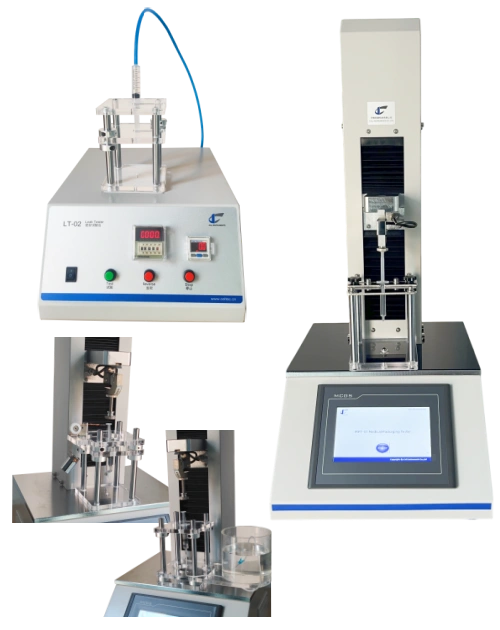
ISO 8537 – Funksjonstesting av sprøyter
ISO 8537 omfatter flere ytelsestester som avgjør om en sprøyte kan brukes sikkert og nøyaktig under oppsuging og injeksjon. Standarden omfatter testing av:
- Luftlekkasje under aspirasjon
- Væskelekkasje under trykk
- Stempelets drivkraft
- Tetningens tetthet
- Dødvolum
- Lekkasje ved tilkoblingen mellom nål og dyse
Disse testene hjelper produsentene med å vurdere:
- Konsistensen i stempelpakningen
- Tønne- og dyseintegritet
- Smøreeffektivitet
- Nøyaktighet ved dosering
- Påliteligheten i forbindelsen mellom sprøyte og nål
Moderne laboratorier tar i stadig større grad i bruk automatiserte testsystemer for å forbedre repeterbarheten og redusere variasjoner knyttet til operatøren.
Tetthetsprøving av sprøyter i henhold til ISO 8537
Lekkasjetesting av sprøyter er en av de viktigste prosedyrene som er beskrevet i ISO 8537. Standarden vurderer både luftlekkasje og væskelekkasje under ulike trykkforhold.
Luftlekkasje under aspirasjon
Vedlegg B og vedlegg F beskriver metoder for å påvise luftlekkasje forbi stempelpakningen og sprøytedysens tilkoblinger under vakuumforhold.
Fremgangsmåten omfatter vanligvis:
- Fyll sprøyten med destillert vann
- Koble sprøyten til en kompatibel konisk kobling
- Påføring av undertrykk
- Overvåking av trykkstabilitet
- Å observere lekkasje eller dannelse av bobler
ISO 8537 angir et vakuumnivå på 88 kPa under atmosfærisk trykk for vurdering av lekkasje ved aspirasjon. Operatørene observerer sprøyten for å se etter trykkfall, dannelse av bobler og løsrivelse av gummiproppen.
Denne testen kontrollerer:
- Stempelpakningens tetthet
- Tetningsevnen til nålehylsen
- Stabilitet i dysetilkoblingen
- Motstand mot aspirasjonslekkasje
Vakuumlekkasjetest – farmasøytiske anvendelser
A vakuumlekkasjetest for farmasøytisk bruk Denne prosedyren er avgjørende for medisinske sprøyter som brukes til insulinadministrering, fordi selv små lekkasjer kan påvirke doseringsnøyaktigheten eller steriliteten.
Cell Instruments anbefaler automatiserte systemer for vakuumlekkasjetesting som er utstyrt med:
- Vakuumregulatorer med høy presisjon
- Digital trykkovervåking
- Analyse av lekkasjens avklingning
- Programmerbar holdetid
- Programvare for dataregistrering
Disse systemene forbedrer repeterbarheten sammenlignet med manuelle metoder for vakuumvurdering og bidrar til at laboratoriene oppfyller GMP- og ISO-kravene til dokumentasjon.
Testmetoder for å kontrollere sprøytepakningens tetthet
Den Test av sprøytepakningens tetthet vurderer om væske eller luft kan trenge forbi tetningsflater under kompresjon eller aspirasjon.
ISO 8537, vedlegg E, omhandler væskelekkasje ved:
- Stempelpakninger
- Tilkoblinger for sprøytemunnstykker
- Nål-/sylindertilkoblinger
Under testingen skaper operatørene et indre trykk på 300 kPa manometertrykk og hold trykket i 30 sekunder mens du utøver en sideveis kraft på stempelet.
Prosedyren vurderer:
- Motstand mot deformasjon av tetningen
- Lekkasje under sidebelastning
- Stabilitet i stempelbevegelsen
- Tilkoblingsintegritet
Et pålitelig system for kontroll av tetningsintegritet bør sikre:
- Stabil trykkdannelse
- Nøyaktig kraftpåføring
- Lekkasjedeteksjon i sanntid
- Overvåking av forskyvning med høy oppløsning
Cell Instruments tilbyr løsninger for trykklekkasje og tetningsintegritet som er egnet for insulinsprøyter, Luer-systemer, legemiddelbeholdere og medisinsk emballasje.
Testing av sprøytens glidestyrke
Testing av sprøytens glidekraft måler kraften som kreves for å sette i gang og opprettholde stempelbevegelsen under utstøting av væske.
ISO 8537, vedlegg C, angir bruk av en mekanisk testmaskin for å registrere stempelets driftskraft mens vannet presses ut av sprøyten.
Testen måler vanligvis:
- Løsrivningskraft
- Glidekraft
- Gjennomsnittlig driftskraft
- Sørg for jevn kraftutøvelse gjennom hele bevegelsen
En stabil glidekraft er avgjørende, da for stor kraft kan redusere brukervennligheten, mens for liten motstand kan svekke doseringskontrollen.
Viktige faktorer som påvirker glidekraften
Flere parametere påvirker sprøytenes glideegenskaper:
- Jevn fordeling av silikonsmøremiddel
- Gummiproppens materiale
- Dimensjonsnøyaktighet for løp
- Overflatefriksjon
- Nåldiameter
Et profesjonelt system for måling av sprøytekraft bør omfatte:
- Presisjonslastcelleteknologi
- Bevegelseskontroll med konstant hastighet
- Analyse av kraft-forskyvningskurven
- Justerbare testoppsett
- Datastyrt datainnsamling
Cell Instruments anbefaler universelle materialprøvingssystemer utstyrt med spesialtilpassede sprøytefester for stempelkraftprøving i henhold til ISO 8537.
Måling av dødvolum for insulinsprøyter
Måling av dødvolum bestemmer det gjenværende væskevolumet i sprøyten etter at stempelet er trykket helt ned.
Et lite dødrom er spesielt viktig for insulinsprøyter, fordi rester av medisinen kan påvirke doseringsnøyaktigheten og føre til økt medisinsk avfall.
ISO 8537, vedlegg D, beskriver en gravimetrisk testmetode basert på måling av vannmasse.
Måleprosedyre for dødt rom
Fremgangsmåten innebærer følgende:
- Vekting av den tomme sprøyten
- Fyll sprøyten med destillert vann
- Fjerne vannet helt
- Å veie sprøyten på nytt
- Beregning av vannvolumet som holdes tilbake
Den gjenværende vannmengden tilsvarer volumet av sprøytenes dødrom.
Betydningen av testing av dødplass
Måling av dødvolum hjelper produsenter med å vurdere:
- Doseringsnøyaktighet
- Restkonsentrasjon av legemidlet
- Strukturell optimalisering av sprøyter
- Effektivitet i utformingen av nåleholderen
Cell Instruments kan tilby integrering av presisjonsvekt og skreddersydde testplattformer for automatisert analyse av dødrom.
Anbefalt testutstyr for å oppfylle kravene i ISO 8537
For å sikre samsvar med ISO 8537 bruker laboratorier vanligvis:
| Testoppgave | Anbefalt instrument |
|---|---|
| Vakuumlekkasjetesting | SLT-02 Lekkasjetester for sprøyter |
| Stempelets drivkraft | |
| Analyse av dødplass | Gravimetrisk målesystem |
| Testing av tilkoblingslekkasjer |
Cell Instruments tilbyr skreddersydde automatiseringsløsninger for laboratorier som utfører sprøytetesting, blant annet systemer med flere stasjoner, programvare for datahåndtering og integrerte plattformer for kvalitetskontroll.
Vanlige spørsmål
Hva er ISO 8537?
ISO 8537 er en internasjonal standard som fastsetter krav og prøvingsmetoder for sterile engangsinsulinsprøyter, med eller uten nåler.
Hva er lekkasjetesting av sprøyter i henhold til ISO 8537?
Lekkasjetesting av sprøyter måler luft- eller væskelekkasje gjennom stempelpakninger, sprøytemunnstykker og nåletilkoblinger under vakuum- eller trykkforhold.
Hvorfor er det viktig å teste glidekraften til sprøyter?
Glidekrafttesting sikrer at stempelet beveger seg jevnt og jevnt, noe som garanterer nøyaktig insulinavgivelse og at sprøyten fungerer som den skal.
Hva er en test av sprøyteforseglingens integritet?
En test av sprøyteforseglingens tetthet avgjør om forseglingene hindrer lekkasje under kompresjon og aspirasjon.
Hvordan utføres måling av dødvolum?
Ved måling av dødvolum benyttes en gravimetrisk metode der sprøytenes masse før og etter uttømming av vann sammenlignes for å bestemme gjenværende væskevolum.
Hvilke instrumenter brukes til ISO 8537 testing?
Vanlige instrumenter omfatter vakuumlekkasjetestere, universelle testmaskiner, trykkfallssystemer og gravimetrisk måleutstyr.
 English
  العربية
  Български
  Čeština
  Dansk
Dansk  Deutsch
  Ελληνικά
  Español
  Eesti
Eesti  Suomi
Suomi  Français
  Magyar
  Bahasa Indonesia
  Italiano
  日本語
日本語  한국어
한국어  Lietuvių kalba
  Latviešu valoda
  Norsk bokmål
  Nederlands
  Polski
  Português
  Română
  Русский
  Slovenčina
  Slovenščina
  Svenska
  Türkçe
  Українська
  עִבְרִית
  ไทย
ไทย  Tiếng Việt