
Testul de funcționalitate al dispozitivelor de închidere din elastomer
USP 381
Standardul USP 381 definește cerințele privind testarea funcțională a închizătorilor elastomerici, punând accentul pe penetrabilitate, fragmentare și performanța de autosigilare. Aceste teste simulează condițiile reale de utilizare pentru a asigura că închizătorii își mențin integritatea, previn contaminarea și permit penetrarea în siguranță a acului. Respectarea standardului necesită măsurarea precisă a forței, proceduri controlate de perforare și detectarea fiabilă a scurgerilor. Utilizarea instrumentelor adecvate și a metodelor standardizate ajută producătorii să îndeplinească cerințele de reglementare și să asigure siguranța ambalajelor farmaceutice.
Testul de funcționalitate al dispozitivelor de închidere din elastomer
The testul de funcționalitate al dispozitivelor de închidere din elastomer în USP 381 se evaluează trei aspecte cheie ale performanței:
- Penetrabilitate
- Fragmentarea
- Capacitatea de autosigilare
Aceste teste simulează condițiile reale de utilizare, în special introducerea acului în timpul administrării medicamentului. Pregătirea corespunzătoare a probelor este esențială, întrucât capacele trebuie tratate și uscate conform procedurilor specificate înainte de testare.
Test de penetrabilitate pentru dopuri de cauciuc
The test de permeabilitate pentru dopuri de cauciuc măsoară forța necesară pentru ca un ac hipodermic să străpungă închizătoarea.
Principiul de testare
Un ac standardizat (cu muchie lungă, 12 ± 2°) penetrează închizătoarea pe verticală. Testul cuantifică forța de rezistență, care influențează în mod direct ușurința de utilizare în mediul clinic.
Cerințe cheie
- Forța maximă admisă: ≤ 10 N
- Precizia măsurătorilor: ±0,25 N
- Fiecare închidere utilizează un ac nou
Perspectivă practică
O forță de penetrare excesivă poate provoca:
- Dificultăți în administrarea medicamentelor
- Îndoirea sau deteriorarea acului
- Experiență de utilizare nesatisfăcătoare pentru profesioniștii din domeniul sănătății
Instrument recomandat
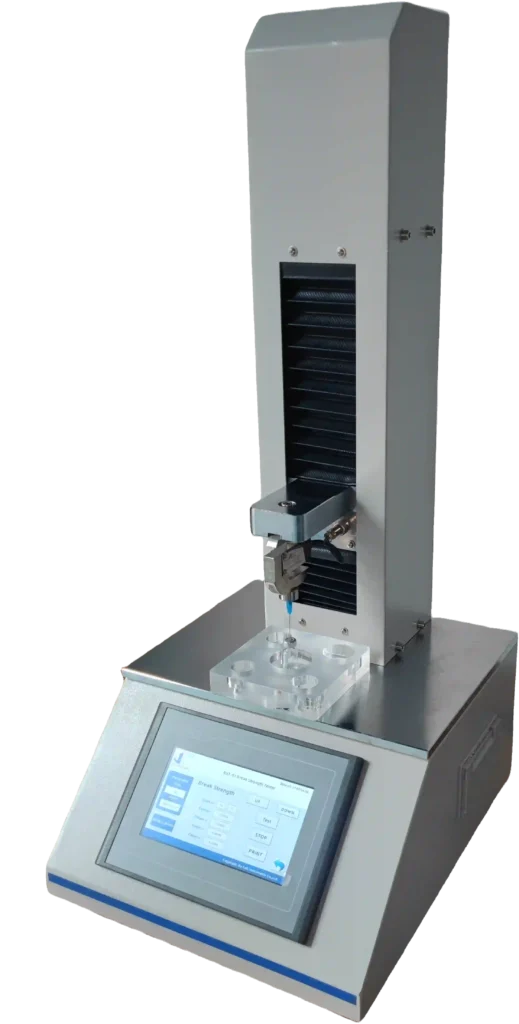
The Aparat de testare a rezistenței la perforare cu ac Cell Instruments NPT-01 asigură o măsurare precisă a forței, cu viteză și deplasare controlate. Parametrii de testare programabili ai acestuia garantează respectarea standardului USP 381, îmbunătățind în același timp repetabilitatea și eficiența.
Test de fragmentare
Testul de fragmentare evaluează dacă se generează particule de cauciuc în urma puncțiilor repetate cu acul.
Prezentare generală a procedurii de testare
- Capacele sunt montate pe flacoane și pregătite
- Fiecare închizătoare este perforată de patru ori, în locuri diferite
- Lichidul extras este filtrat printr-un Filtru ≤ 0,5 μm
- Se numără particulele vizibile
Criterii de acceptare
- Nu mai mult de cinci fragmente vizibile
De ce este important
Fragmentarea prezintă un risc direct de contaminare. Particulele care pătrund în medicamentele injectabile pot duce la:
- Riscuri pentru siguranța pacienților
- Nerespectarea reglementărilor
- Retrageri de produse
Verificarea microscopică se utilizează atunci când identificarea particulelor este incertă, asigurând fiabilitatea rezultatelor.
Testul de autoetanșare al dispozitivului de închidere din elastomer
The Testul de autoetanșare a închizăturii elastomerice verifică capacitatea închizătorii de a se resigila după multiple perforări.
Metoda de testare
- Fiecare închizătoare este perforată de 10 ori
- Flacoanele sunt scufundate în Soluție de albastru de metilen 0,11 TP3T
- Un vid de 27 kPa se aplică
- Probele sunt examinate pentru a se verifica dacă a pătruns colorant
Criterii de acceptare
- Nu s-a constatat pătrunderea colorantului în niciun flacon
Perspective privind testarea
Acest test simulează utilizarea flacoanelor cu doze multiple. O etanșare necorespunzătoare poate avea ca urmare:
- Contaminarea microbiană
- Pierderea sterilității
- Termen de valabilitate redus
Instrument recomandat
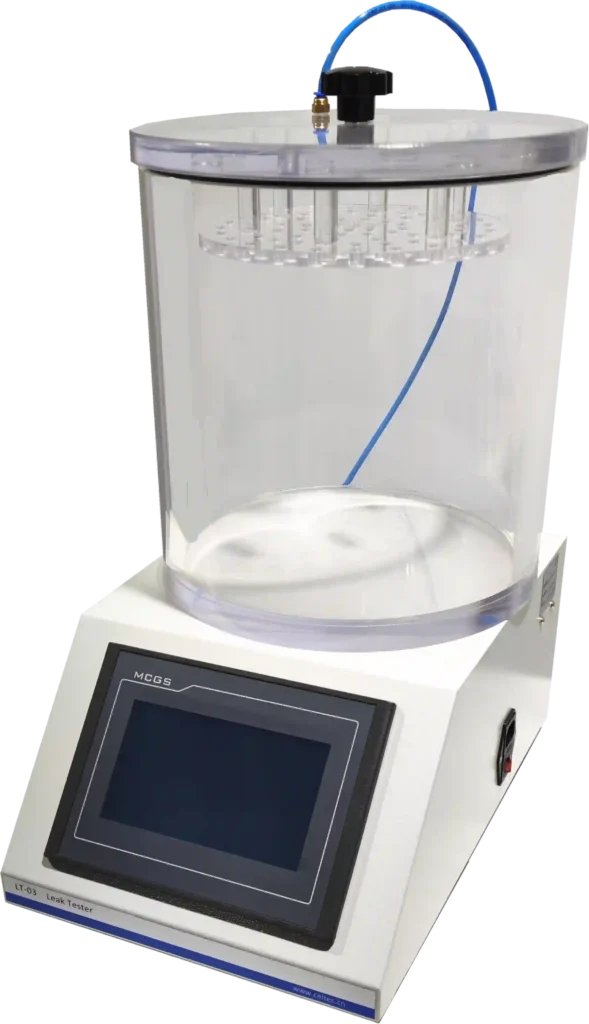
The Aparat de testare a etanșeității Cell Instruments LT-03 oferă un control stabil al vidului și detectare vizuală, fiind astfel ideal pentru testarea pătrunderii albastrului de metilen. Camerele sale personalizabile se adaptează la flacoane de diferite dimensiuni, sporind flexibilitatea testării.
Asigurați-vă că se respectă USP 381 prin efectuarea unor teste precise de penetrabilitate, fragmentare și autosigilare. Cu ajutorul unor instrumente avansate precum NPT-01 și LT-03, laboratoarele pot realiza teste precise, repetabile și eficiente. Optimizați-vă fluxul de lucru în domeniul controlului calității, reduceți riscurile și respectați standardele farmaceutice globale cu soluții fiabile de testare a închiderilor elastomerice, adaptate nevoilor aplicației dumneavoastră.
 English
  العربية
  Български
  Čeština
  Dansk
Dansk  Deutsch
  Ελληνικά
  Español
  Eesti
Eesti  Suomi
Suomi  Français
  Magyar
  Bahasa Indonesia
  Italiano
  日本語
日本語  한국어
한국어  Lietuvių kalba
  Latviešu valoda
  Norsk bokmål
  Nederlands
  Polski
  Português
  Română
  Русский
  Slovenčina
  Slovenščina
  Svenska
  Türkçe
  Українська
  עִבְרִית
  ไทย
ไทย  Tiếng Việt