
Introduction to Needle Toughness Test
The Needle Toughness Test is essential for evaluating the mechanical properties of needle tubing used in the manufacture of hypodermic needles and other medical devices. One of the key aspects of this test involves examining the resistance of tubing to breakage, which is critical for ensuring the safety and performance of medical devices. This test, which includes both stiffness oraz breakage resistance, is performed following recognized standards, such as ISO 9626.
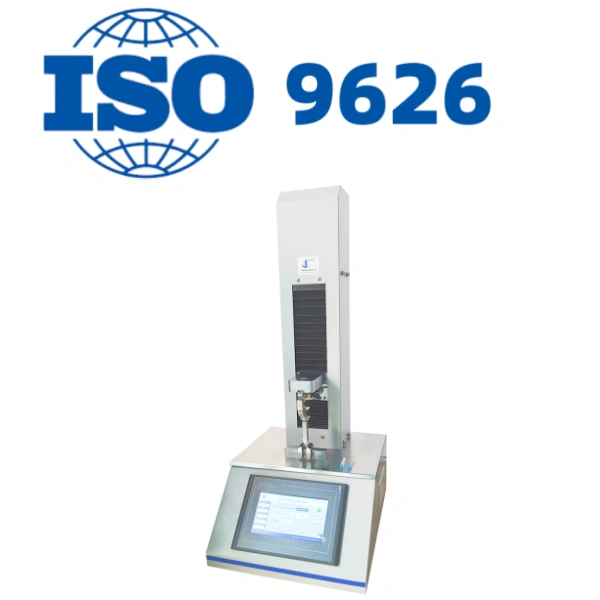
Understanding ISO 9626 and Its Importance
ISO 9626:2016 specifies the requirements and test methods for rigid stainless steel needle tubing. These tubes are primarily used in medical devices, including hypodermic needles, and are essential for human use. The ISO 9626 standard outlines the required dimensions, mechanical properties, and performance tests for the tubing.
The ISO 9626 standard applies to stainless steel tubing with a diameter range from 0.18 mm (34 Gauge) to 3.4 mm (10 Gauge). It sets guidelines for testing stiffness, resistance to breakage, and other mechanical properties to ensure that the tubing can withstand the stresses and strains it might experience during medical procedures.
The Importance of Needle Tubing Breakage Resistance
One of the primary concerns when manufacturing medical devices is ensuring that the tubing is resistant to breakage. A needle tubing breakage resistance test evaluates the ability of the needle tubing to withstand mechanical stress without fracturing. The test involves applying a bending force to the tubing, simulating the mechanical stresses the tube might experience in real-world applications.
In this test, the tubing is subjected to a specific number of bending cycles, each time bending the tubing in one direction and then reversing it. After completing the test cycles, the tubing is inspected for visible breakage. The resistance of tubing to breakage is crucial because even small defects or fractures can compromise the safety and functionality of medical devices.
Stiffness of Tubing: A Critical Parameter in Medical Device Manufacturing
The stiffness of tubing is another critical mechanical property that affects the performance of medical devices, especially in applications like hypodermic needles. Stiffness refers to the resistance of the tubing to deformation when a force is applied. A test sztywności rurki is conducted by applying a specified downward force to the center of the tubing while it is supported at both ends.
Według ISO 9626, a plunger is used to apply the force at the center of the tubing, and the deflection of the tubing is measured. The degree of deflection gives an indication of how rigid or flexible the tubing is. For medical devices, the right level of stiffness is essential to ensure the needle performs reliably without risk of bending or breaking during use.
Key Testing Methods for Needle Toughness
1. Tubing Stiffness Test
In the test sztywności rurki, a specified force is applied to the center of the tubing, and the deflection at this point is measured. This test simulates how the needle will perform when pressure is applied during medical procedures. The aparat do badania sztywności is designed to apply forces up to 60 N and measure deflection to an accuracy of ±0.01 mm. This test ensures that the needle is neither too stiff, which could affect its usability, nor too flexible, which could compromise its integrity.
The test procedure follows these steps:
- The tubing is placed on a testing apparatus that applies a force to the center of the tube.
- The force is applied at a rate between 1 mm/min and 10 mm/min.
- The deflection is measured and recorded to the nearest 0.01 mm.
2. Tubing Breakage Resistance Test
The resistance of tubing to breakage test involves bending the tubing to specific angles, simulating real-life stresses the tubing may undergo. The test includes:
- Fixing one end of the tubing and applying force at a point specified by the standards.
- Bending the tubing through a specified angle, typically 25° for regular-walled tubing.
- Reversing the force to bend the tubing in the opposite direction.
- Repeating this process for 20 cycles to test the tubing’s durability.
After the test, the tubing is visually inspected for signs of breakage or failure.
Why Testing According to ISO 9626 Matters
Testowanie needle toughness wg. ISO 9626 ensures that the tubing used in medical devices meets international standards for safety, performance, and durability. These tests are essential for manufacturers who want to guarantee that their products will not fail during use, which could lead to injury or compromised treatment outcomes. By adhering to these rigorous testing procedures, manufacturers can ensure that their products are reliable, durable, and safe for human use.
How Cell Instruments Can Help
For manufacturers looking to perform precise stiffness oraz breakage resistance tests, Cell Instruments Co., Ltd. offers a range of high-precision testing equipment, including Tubing Stiffness Testers that comply with ISO 9626 standards. These devices allow for accurate measurement of stiffness oraz resistance to breakage, helping manufacturers meet quality control requirements and ensure that their products meet the highest standards.
Nasz Tubing Stiffness Testers are designed to provide accurate and reproducible results, ensuring that your needle tubing meets the mechanical performance requirements for medical devices. With our testing equipment, manufacturers can quickly identify any issues with tubing performance, leading to safer and more effective medical products.
Wnioski
The Needle Toughness Test is a crucial step in evaluating the performance and safety of needle tubing used in medical devices. By conducting tests such as the test sztywności rurki oraz odporność rurki na test pęknięcia, manufacturers can ensure that their products meet the highest standards of safety and reliability. Complying with ISO 9626 ensures that the tubing can withstand the mechanical stresses it will encounter during use, providing medical professionals with confidence in the quality of the devices they use.
For reliable, precise testing, Cell Instruments Co., Ltd. offers the necessary tools to meet these standards and ensure that your products perform optimally in medical applications.
 English
  العربية
  Български
  Čeština
  Dansk
Dansk  Deutsch
  Ελληνικά
  Español
  Eesti
Eesti  Suomi
Suomi  Français
  Magyar
  Bahasa Indonesia
  Italiano
  日本語
日本語  한국어
한국어  Lietuvių kalba
  Latviešu valoda
  Norsk bokmål
  Nederlands
  Polski
  Português
  Română
  Русский
  Slovenčina
  Slovenščina
  Svenska
  Türkçe
  Українська